Table of Contents
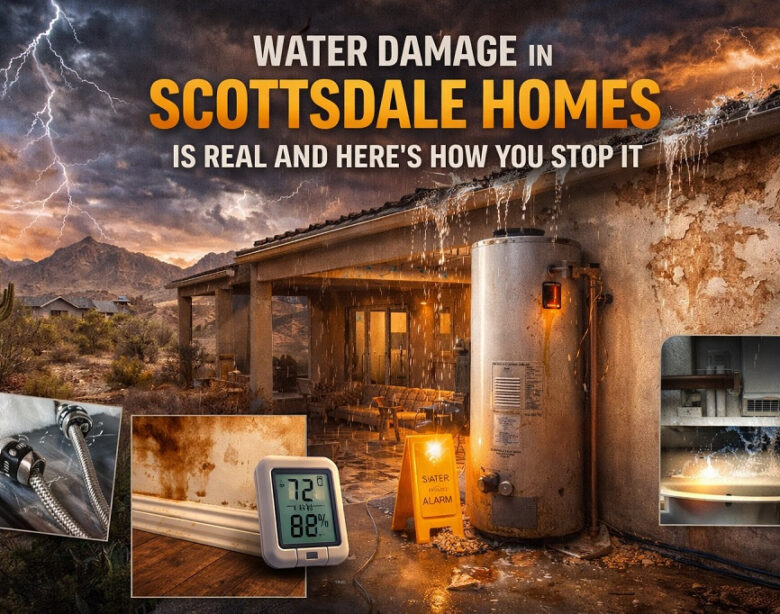
People think the desert means no water problems. Plumbing, old appliances, and monsoon season are behind most of it. Preventable stuff, honestly. Stains on walls, funky smells, water bills creeping up. Your house is begging you to pay attention. A cheap leak sensor by your water heater could save you five figures. No joke. Mold shows up in 48 hours. It does not care about your schedule.
Understanding Water Risks in a Desert Climate
Nobody moves to Scottsdale worrying about water damage. Eight inches of rain a year. Dry heat. Makes zero sense on paper. But here is what catches people off guard. That 40 degree temperature swing between noon and midnight? Brutal on your plumbing. Pipes expand, contract, expand again. Day after day, year after year. Joints get loose. Seals go brittle. And our soil is a whole different animal. Bone dry for months, then saturated overnight when monsoons roll through. Your foundation takes that beating quietly until one day it does not. Most of Scottsdale sits on top of caliche. Basically a rock hard mineral layer. Water hits it and has nowhere to go except sideways. Right toward your foundation walls.
Common Sources of Interior Water Intrusion
Plumbing and Slab Leaks
Homes from the eighties have copper supply lines running under the slab. Our soil destroys copper over time. Minerals just eat right through it. The ugly part about slab leaks is how invisible they are. Water pooling under your foundation for weeks while life goes on upstairs. Then your floor feels warm in one random spot. Or your water bill looks wrong. By that point you are already dealing with warped flooring and maybe foundation cracks. Wall leaks are quieter. Tiny pinhole drip behind the drywall. Mold within two days. Not a scare tactic. Just reality in a warm climate.
Appliance Malfunctions
That rubber washing machine hose you have never looked at since move in day? It is probably cracking right now. When those things blow, they dump water fast. An upstairs laundry room flood while you are at the office is an absolute nightmare. Dishwashers do their damage slowly. Little drip from the door gasket, rotting the subfloor for months. Fridge ice maker lines are sneaky too. Thin plastic tube, always under pressure. Fails without warning.
Water Heater Failures
Tank style heaters last maybe 8 to 12 years. Our hard water shortens that. Quick thing most people skip. There is an anode rod inside the tank. Whole purpose is to corrode instead of the tank walls. Nobody ever checks it. If yours is past 5 years old, go pull it out and look. Might save you a catastrophe.
The Impact of Monsoon Storms
Monsoon season flips a switch around here. June through September. You go from clear skies to absolute chaos in maybe 20 minutes. An inch of rain in under an hour. Streets turn into rivers. Gutters give up. If your yard slopes toward the house, that water has one destination. Flat roofs make things worse. Every Scottsdale neighborhood has them. Beautiful until the scuppers clog with dust and debris from haboobs. Then you have a pond on your roof finding every tiny gap. People expect monsoon damage to look dramatic but usually it is not. Water creeping around a window frame. Getting behind stucco through a hairline crack nobody noticed. One storm probably does nothing. But hit that same weak spot four times over a summer and you have got trouble growing inside the walls.
Warning Signs Every Homeowner Should Know
Cosmetic Changes
Do you see brown spots on your ceiling or laminate flooring bending at the edges? Baseboards swelling and pulling off the wall. Then water is somewhere it should not be.
Unexpected Odors
That damp musty smell when you walk into a room? Mold. Moisture got trapped and stuff started growing. Sewage odor is a different beast entirely. Cracked drain pipe or a wax ring gone bad under the toilet. Handle that one immediately because it is a health thing, not just a property thing.
Utility Bill Fluctuations
Honestly your water bill might be the best early warning system you own. Jumps 25 bucks out of nowhere? Something is leaking. Kill the irrigation for a day and watch the meter. Still ticking? The problem is inside.
Practical Tips for You
Monitor the water pressure constantly
Grab a pressure gauge. Ten bucks at any hardware store. Screw it on a hose bib. Over 80 psi means you are slowly wrecking every connection in your house. Neighborhoods near the McDowell Mountains can see 100 psi or more coming from the city. Get a pressure reducing valve installed if that is you.
Inspect Supply Lines Regularly
Twice a year. Under the sinks. Behind the washer. By the water heater. Looking for drips, rust, anything crusty or wet. If you still have rubber hoses on the washing machine, swap them for braided stainless steel before you do anything else today. Those rubber ones become grenades after about five years.
Check your HVAC System
Your AC is running full blast April through October. All that cooling means condensation. That condensation drains through one little line. Line clogs with algae or gunk, water backs up, overflows the pan, drips into your ceiling. Happens constantly around here in summer. Pour vinegar down the line every couple months. Thirty seconds of effort.
The Role of Smart Technology
Leak sensors run 20 to 40 bucks and they are worth every penny. Stick them under sinks, by the heater, behind the washer. Phone goes off the second water touches them. Whole house shutoff valves take it further. They sit on your main line and talk to those sensors. Leak detected, valve closes, no human needed. For anyone with a second home in Scottsdale or snowbirds heading north for summer, this is the move. Usage monitors are worth a look too. They learn your normal water patterns. Something running at 3am when the house is asleep? Alert on your phone before you even wake up.
When Professional Intervention is Necessary
Water coming through the ceiling with no obvious source is not a YouTube tutorial situation. Neither is sewage smell or visible mold on building materials. That needs trained people with real equipment. Good restoration crews bring moisture meters, thermal cameras, industrial drying setups. They find hidden water, tear out what is ruined, treat for microbial growth, and dry everything to spec before anyone touches a rebuild. Half measures lead to mold surprises six months later. Get the help of a local restoration knows Scottsdale neighborhoods inside and out to handle water damage restoration in Scottsdale. They handle everything from emergency extraction to full rebuild and work directly with your insurance company so you are not fighting that battle on your own. And timing matters more than people realize. That small manageable leak on Monday becomes a $20,000 gut job by Friday if nobody acts.
Conclusion
Scottsdale is a great place to own a home. The desert just does not hand you a free pass on water damage. Hard water corroding pipes, monsoons hammering flat roofs, appliances quietly failing behind the scenes. Plenty can go sideways. Check pressure. Swap old hoses. Keep the AC drain clear. Drop a few sensors around the house. Almost all of it is preventable.